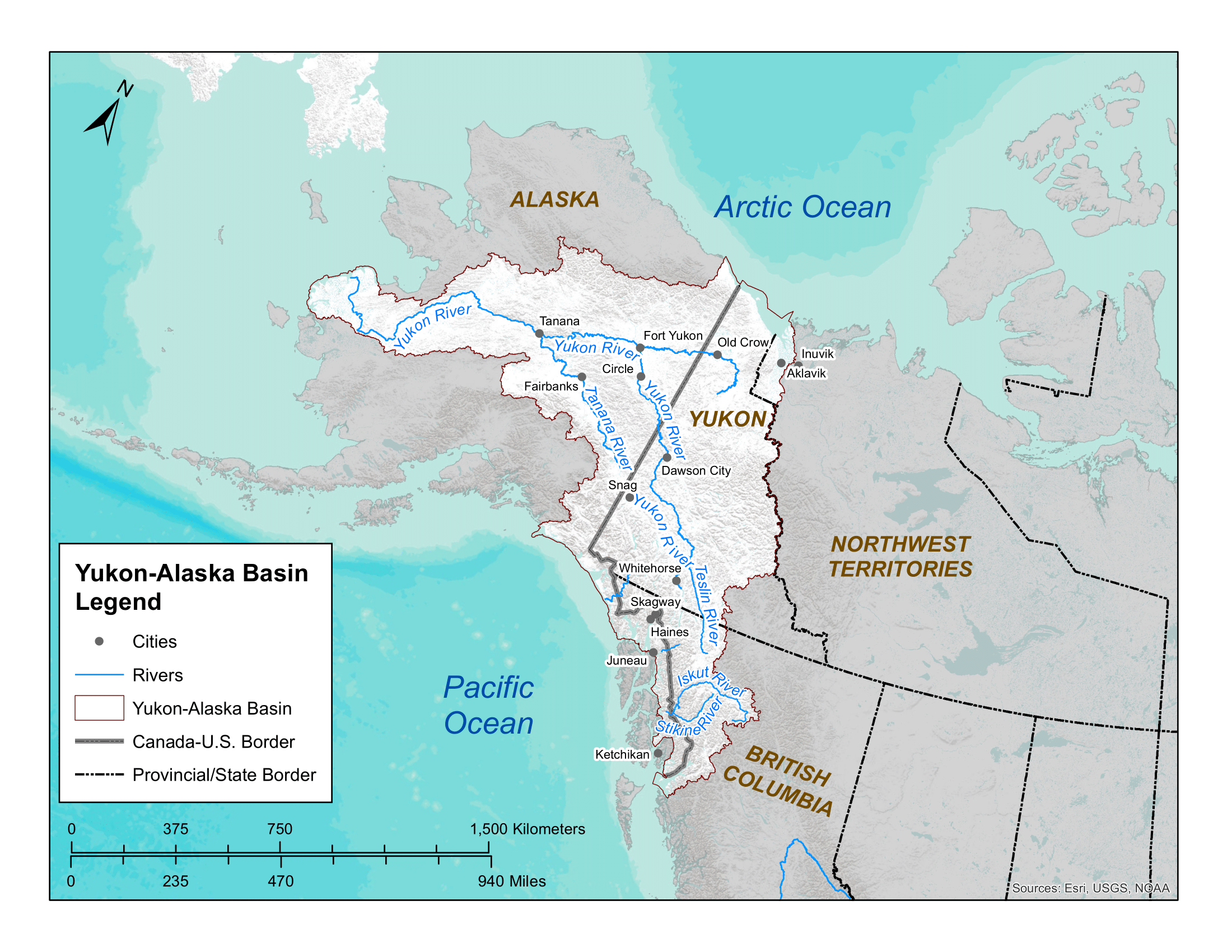

A map of Alaska and the Yukon Territory offers a glimpse into a vast and sparsely populated region of North America, dominated by stunning natural landscapes and a rich history. The two territories, while distinct, share geographical features and historical connections, making their combined map particularly informative.
Looking at the map, the sheer size is immediately striking. Alaska, the largest US state, dwarfs many other states in comparison. The Yukon Territory, located to its east, similarly covers a significant land area within Canada. The map highlights a rugged and varied terrain. Coastal areas, especially in southern Alaska, are characterized by intricate networks of fjords, islands, and mountains sculpted by glaciers. The Alexander Archipelago, a group of islands extending along the southeastern coast of Alaska, is a prominent feature.
Moving inland, the towering mountain ranges dominate. The Alaska Range, home to Denali (formerly Mount McKinley), the highest peak in North America, forms a dramatic arc across the state. The Yukon Territory boasts its own impressive mountain ranges, including the Saint Elias Mountains, which straddle the border with Alaska. These mountains are essential for understanding the region’s climate and hydrology, as they collect vast amounts of snow and ice, feeding numerous rivers and glaciers.
Major waterways are crucial elements on the map. The Yukon River, a transboundary river flowing from the Yukon Territory across Alaska and eventually emptying into the Bering Sea, is a defining feature. Its watershed drains a vast area and has historically been a vital transportation route. Other significant rivers include the Kuskokwim, Tanana, and Copper Rivers in Alaska, and the Peel River in the Yukon. These rivers are not only important for transportation and sustenance but also play a vital role in the region’s ecosystem.
The map also reveals the location of communities, which are often clustered along the coast or major rivers due to accessibility and historical patterns of settlement. Anchorage, Alaska’s largest city, and Whitehorse, the capital of the Yukon Territory, stand out as major population centers. Smaller towns and villages, often with a significant Indigenous population, are scattered throughout the region, reflecting the historical dependence on resource extraction and traditional subsistence activities.
Political boundaries are clearly delineated, separating Alaska (USA) from the Yukon Territory (Canada) and other Canadian territories and provinces. However, the map also underscores the shared geographical and ecological characteristics that transcend these political lines. The Bering Strait, separating Alaska from Russia, marks the westernmost point of North America and highlights the region’s strategic location.
In essence, a map of Alaska and the Yukon Territory is a window into a land of extreme beauty and natural resources. It shows a challenging environment that has shaped the lives and cultures of its inhabitants for millennia. From towering mountains and glacial landscapes to vast river systems and isolated communities, the map tells a story of resilience, adaptation, and the enduring power of nature.